Wood-Destroying Insects
in Houston & Fort Bend County.

Six species. One inspection. Everything buyers and homeowners in Houston need to know about the wood-destroying insects found in Texas structures — and what the official WDI report documents.

Species Covered
Subterranean Termites
Formosan Termites
Drywood Termites
Carpenter Ants
Carpenter Bees
Wood-Boring Beetles
WDIPro Texas Official WDI Report Sugar Land Fort Bend County
What You Receive

The Texas Official
WDI Inspection Report.

After your WDIPro inspection, you'll receive an official Texas Department of Agriculture WDI Inspection Report (SPCS/T-5) within 24 hours — and the HUD NPMA-33 Form at no extra charge.

The report documents exactly what was found — and what wasn't. It doesn't speculate. It doesn't recommend unnecessary treatment. It records visible evidence, and lets you and your lender act on that information.

Report Includes
Scope of inspection and property address
Identification of inaccessible areas
Conditions conducive to wood-destroying insects
Evidence of past or active infestations
Indications of previous termite treatments
Perimeter diagram with measurements and findings
This report is not a structural damage report but identifies evidence of termite or WDI activity that may require further evaluation and correction.
The Houston Threat Level

Why Houston Is
Ground Zero for WDIs.

Houston's subtropical climate — year-round warmth, high humidity, and clay-heavy soil — creates near-ideal conditions for every major wood-destroying insect species found in Texas.

Termites alone account for three times as much biomass as humans on Earth. In Fort Bend County and Harris County, where soil moisture levels remain high and winters rarely kill colonies, termite pressure is essentially continuous. Formosan termites — the most aggressive species — have established permanent, expanding populations across the entire Houston metro.

A professional WDI inspection is the only tool that gives buyers, sellers, and homeowners an accurate picture of what a structure actually contains.

70%
of Houston homeowners will experience termite damage within 25 years
$5B+
in annual US property damage caused by wood-destroying insects
$500M
in annual damage caused by subterranean termites in Texas alone
1M+
Formosan termite colony members within just five years of establishment
Wood-Destroying Insects

Six Species. One Inspection.
Every One Documented.

The Texas Official WDI Report covers all six of the following wood-destroying insect species. Any evidence found — active infestation, prior activity, or conducive conditions — is documented by location on the property diagram.

Subterranean termites Houston TX Fort Bend County WDI inspection High Threat
Most Common in Fort Bend County
Subterranean Termites

Subterranean termites are widespread across Texas, especially in coastal regions, and cause over $500 million in structural damage annually in the state. These termites build underground colonies and access structures through hidden mud tubes built along foundation walls and plumbing. Because they remain concealed inside wood and soil, infestations routinely go undetected until severe structural damage has already occurred.

Habitat: Underground colonies, soil contact required
Indicator: Mud tubes at foundation walls
Annual TX damage: $500M+
Formosan subterranean termites Houston TX WDI inspection Extreme Threat
Most Aggressive Species in Houston
Formosan Subterranean Termites

Formosan termites are one of the most aggressive and destructive termite species in North America — and they are well-established throughout the entire Houston metropolitan area. Colonies grow rapidly, reaching over one million members within five years of establishment. Formosan termites consume wood at a significantly faster rate than native subterranean species and can build aerial carton nests inside walls without soil contact, making them uniquely difficult to detect and control.

Colony size: 1M+ members in 5 years
Unique threat: Aerial nests, no soil required
Houston status: Established metro-wide
Drywood termites Houston TX WDI inspection Fort Bend County Moderate Threat
No Soil Contact Required
Drywood Termites

Unlike subterranean species, drywood termites do not require soil contact and can infest dry, structural wood anywhere inside a home — including attic framing, furniture, door frames, and wall trim. They often go unnoticed for years, silently causing extensive internal damage before any outward signs appear. Identification relies on finding characteristic frass (fecal pellets) near small entry holes in wood surfaces — something the untrained eye frequently misses.

Habitat: Dry structural wood, no soil needed
Indicator: Frass pellets near small entry holes
Common in: Attic framing, older homes
Carpenter ants Fort Bend County Houston TX WDI inspection Notable Threat
Most Common WDI After Termites — Fort Bend County
Carpenter Ants

In Fort Bend County, carpenter ants are the most commonly observed wood-destroying insect after termites. These large ants tunnel through wood to build their nests — not to eat it — creating smooth, clean galleries that weaken structural members over time. Their presence is frequently a secondary indicator: carpenter ants are strongly attracted to moist, damaged, or previously compromised wood, meaning an active carpenter ant infestation often signals an underlying moisture problem that requires independent evaluation.

Behavior: Tunnel through wood, don't consume it
Indicator: Large ants, sawdust-like frass
Significance: Often signals moisture damage
Carpenter bees Houston TX WDI inspection Fort Bend County Low-Moderate
Exterior Wood Damage
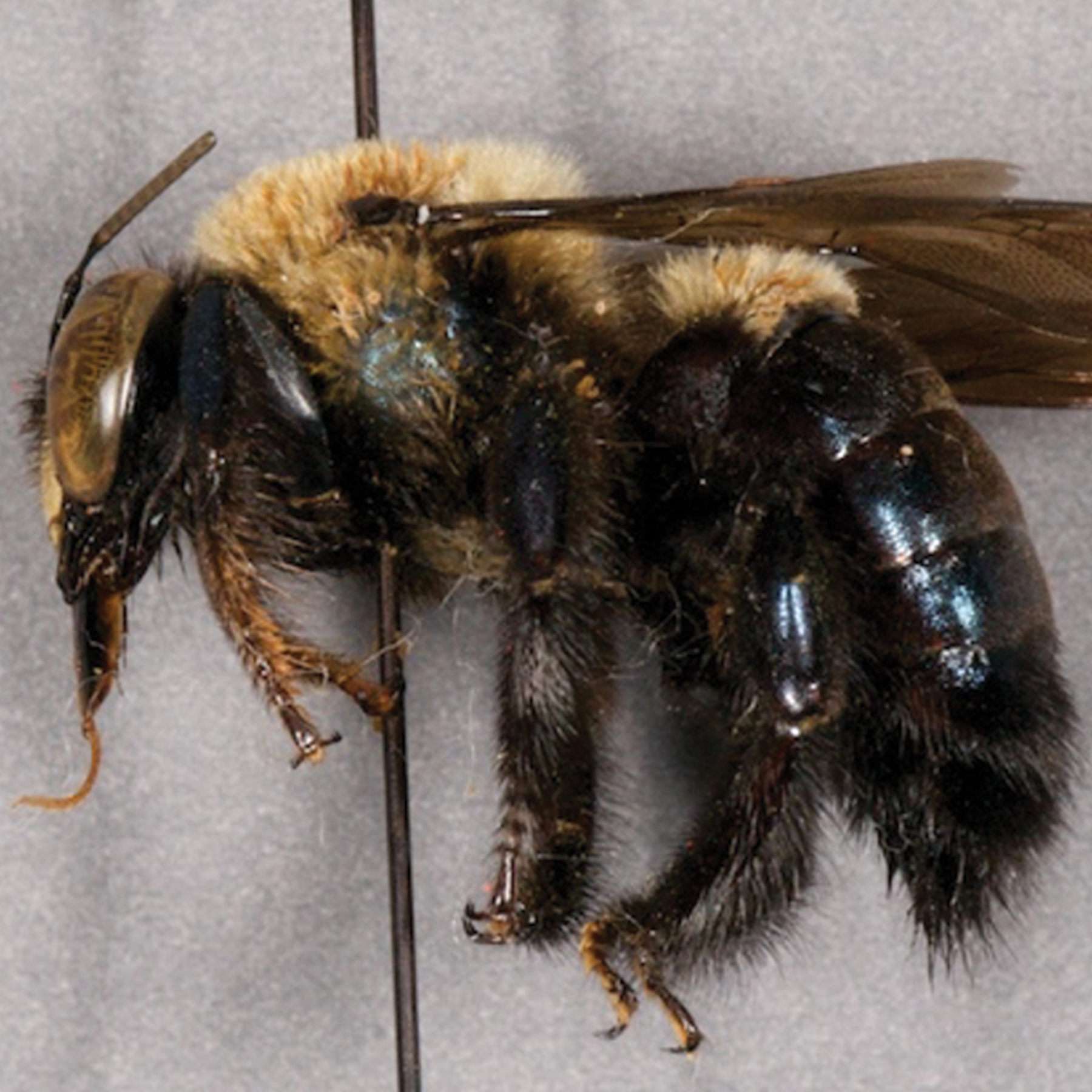
Carpenter Bees

Carpenter bees bore perfectly round, clean entry holes approximately half an inch in diameter into untreated exterior wood to lay their eggs — not to consume it. Decks, fence posts, eaves, soffits, and wood trim are common targets. While a single carpenter bee causes limited damage, repeated nesting across multiple seasons and multiple bees can significantly weaken exterior wood members. Their tunnels also invite secondary infestations from woodpeckers, other insects, and moisture intrusion.

Indicator: Perfectly round ½" holes in exterior wood
Common targets: Decks, eaves, fences, trim
Season: Spring and early summer
Wood boring beetles Houston TX WDI inspection Variable Threat
Larval Stage Damage
Wood-Boring Beetles

Wood-boring beetles cause structural damage during their larval stage, as beetle larvae tunnel through wood creating winding galleries that compromise integrity. The damage can go unseen for years — the larvae live inside the wood, and the adult beetle only becomes visible when it emerges through a small exit hole. Different beetle species (powder post beetles, old house borers, false powder post beetles) require specific treatment approaches, making accurate identification by a licensed inspector critical for effective control.

Damage stage: Larval tunneling inside wood
Indicator: Small exit holes, fine powdery frass
Common species: Powder post, old house borer
Warning Signs

What to Look For
Before You Call.

These are the most common visible signs of wood-destroying insect activity. Seeing any of them warrants a professional inspection — not a wait-and-see approach.

01
Mud Tubes

Pencil-width tunnels of mud running along foundation walls, plumbing pipes, or framing members. The primary above-ground indicator of subterranean or Formosan termites. Active tubes contain live termites. Old tubes may be hollow.

02
Hollow-Sounding Wood

Wood that sounds hollow when tapped indicates internal gallery damage. Termites and carpenter ants consume or tunnel wood from the inside out, leaving a paper-thin exterior surface intact while hollowing out structural members.

03
Discarded Wings

Winged reproductives (swarmers) shed their wings after finding a new colony site. Piles of small, equal-length wings near windowsills, door frames, or light sources indicate a nearby active colony — often subterranean or Formosan termites.

04
Frass — Droppings

Frass is the term for insect droppings left near entry or exit points. Drywood termites produce small, hexagonal pellets. Carpenter ants leave a coarser, sawdust-like frass. Wood-boring beetles produce fine powder. Each type indicates a specific species.

05
Tight or Sticking Doors

Doors and windows that suddenly stick or no longer close properly may indicate termite damage causing structural movement. Formosan termites in particular can compromise framing members enough to cause visible shifts in door and window alignment.

06
Bubbling or Uneven Paint

Termites produce moisture as they feed. This moisture can cause paint to bubble, blister, or appear water-damaged even when no plumbing leak is present. Formosan termites building aerial carton nests in walls are a frequent cause of unexplained interior moisture.

Prevention Measures

What Homeowners Can
Do Right Now.

No amount of prevention eliminates the need for professional inspection in Houston's climate — but these measures reduce risk and reduce the conducive conditions the WDI inspector looks for.

01
Eliminate wood-to-soil contact near the foundation — grade soil so it slopes away from the structure, and keep mulch at least 12 inches from the foundation wall
02
Fix leaky pipes, HVAC condensation, and drainage issues — moisture is the primary attractor for both termites and carpenter ants. Address any source of standing water near or under the structure
03
Keep firewood at least 20 feet from the home and elevated off the ground — firewood is a common reservoir for subterranean termites and carpenter ants in Fort Bend County
04
Seal and paint all exposed exterior wood — untreated wood on decks, eaves, fences, and trim is a primary target for carpenter bees and the entry point for drywood termites
05
Maintain attic and crawl space ventilation — inadequate ventilation drives up moisture levels and creates the warm, humid conditions that termites require for colony establishment
06
Schedule annual WDI inspections — prevention reduces risk, but Houston's termite pressure makes annual professional inspection the only reliable way to catch activity before it becomes extensive damage
Before You Buy,
Get a WDI.

Prevention matters for homeowners who are staying put. But if you're buying — prevention is irrelevant until you know what's already there.

The only way to know what's in the structure you're purchasing is a professional WDI inspection producing a Texas Official Report.

$3,000+ average homeowner repair cost after an untreated termite infestation — vs. $175 for a WDI inspection
Common Questions

WDI FAQ —
Houston & Fort Bend.

What buyers, sellers, and homeowners ask most about wood-destroying insects and WDI inspections in the Houston area.

Request Inspection →
Houston has one of the highest termite activity rates in the United States. The warm, humid climate and clay-heavy soil create ideal conditions for subterranean and Formosan termites year-round. In Texas, 70% of homes will experience some level of termite damage within 25 years. Fort Bend County homeowners face this risk regardless of home age or construction type.
The most common termites in Houston are subterranean termites, including the highly aggressive Formosan subterranean termites. Drywood termites are also present, particularly in older homes and structures with unfinished exterior wood. All three species are documented on the Texas Official WDI Report when evidence is found.
Visible signs of termite activity include mud tubes on foundation walls, hollow-sounding wood when tapped, discarded wings near windows and doors, paint that bubbles or appears blistered without a water leak, and doors or windows that suddenly stick. Subterranean termites work from the inside out — by the time visible signs appear, significant damage may already be present. Professional inspection is the only reliable detection method.
Yes. After termites, carpenter ants are the most commonly observed wood-destroying insect in Fort Bend County. They tunnel through wood to build nests, often targeting wood that is already moist or compromised. Finding carpenter ants in a structure frequently signals an underlying moisture problem — which is itself a conducive condition that attracts termites.
Yes. Termites can infest a new home within 4 days after construction. Even homes built with treated wood require inspections, as Formosan termites can bypass chemical soil barriers by building aerial carton nests above the treated zone. Pre-treated soil also degrades over time. A WDI inspection before closing on new construction is just as important as on a resale property.
Yes. VA loans require a WDI inspection in Texas — no exceptions. FHA and conventional loans may not always require one, but it is strongly recommended for all homebuyers regardless of loan type. The cost of an inspection is negligible compared to the cost of repairing an infestation that was present at closing and went undocumented.
Experts recommend an annual termite inspection for homes in the Houston area given the year-round termite pressure. Annual inspections allow early detection before infestations become extensive, document the property's WDI status over time, and catch conducive conditions before they lead to active infestation. If buying or selling, a WDI inspection should always be performed before closing.
Termites cause over $5 billion in property damage annually across the United States. In Texas alone, subterranean termites account for over $500 million in annual damage. The average homeowner spends $3,000 or more repairing termite-related damage after a confirmed infestation — not including secondary damage to flooring, drywall, and structural framing that often requires additional remediation.
Both are subterranean species, but Formosan termites are significantly more aggressive. Formosan colonies can exceed one million members within five years — native subterranean colonies typically reach 60,000–300,000 members. Formosan termites consume wood faster, can build aerial nests without soil contact, and can penetrate chemical barriers that deter native species. Both are documented on the Texas Official WDI Report when evidence is found.
Reduce risk by eliminating wood-to-soil contact near the foundation, fixing leaks and drainage problems, keeping firewood at least 20 feet from the structure, sealing and painting all exterior wood, and maintaining proper attic and crawl space ventilation. However, in Houston's climate, annual professional WDI inspection remains the only reliable way to detect activity early before it becomes extensive structural damage.

Before You Buy,
Get a WDI.

Texas Official WDI Reports within 24 hours. HUD NPMA-33 included at no extra charge. Starting at $175 + tax. Serving Fort Bend County and West Houston.